
The Fashion and Leather Goods division alone accounts for the majority of LVMH’s operating profit. Understanding the group’s profitability requires going beyond the consolidated revenue to isolate the current operating margins division by division, and especially to identify the levers that cause them to fluctuate from one fiscal year to another.
Operating Margin by LVMH Division: What the Income Statement Structure Reveals
We observe a significant profitability gap between the six pillars of the group. The Fashion and Leather Goods division shows a current operating margin that far exceeds all other branches, driven by the pricing power of Louis Vuitton and Dior, whose production costs remain contained compared to their selling prices.
In contrast, Selective Retailing (Sephora, DFS, Le Bon Marché) structurally generates the lowest margin. The multi-brand retail model compresses gross margins and imposes high rental costs, even when revenue growth is strong.
Between these two extremes, Watches and Jewelry has been improving in profitability since the integration of Tiffany. The overhaul of the high-end offering (Lock, T collections, new high jewelry) and the streamlining of the Tiffany boutique network have continuously improved the profitability of this house. Hublot and TAG Heuer remain more cyclical, with a marked sensitivity to Asian markets. A detailed analysis of the most profitable sectors for LVMH allows us to measure these gaps division by division.
LVMH Perfumes and Cosmetics: Rising Profitability through Premiumization
This division has long been viewed as a marketing cost center rather than a margin generator. The situation has evolved. In 2024, the current operating margin of Perfumes and Cosmetics improved thanks to two specific levers.
The first is the premiumization of certain lines, particularly Dior Beauty and Guerlain, which are repositioning their flagship products in higher price segments. The second concerns the refocusing on higher value-added distribution networks: owned retail and premium travel retail, at the expense of traditional wholesale.
This shift reduces the volumes sold to third-party distributors but improves net revenue per unit. We recommend monitoring the ratio between owned sales and wholesale sales in the upcoming semi-annual reports: it is the best leading indicator of this division’s margin trajectory.
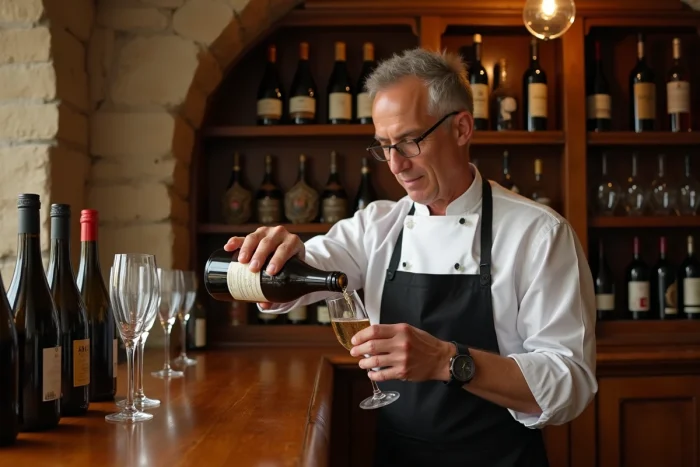
Wines and Spirits: The Decline in Cognac Profitability Affects the Whole
The Wines and Spirits branch has seen its profitability decline due to the combined effects of the slowdown in cognac and the post-Covid normalization of volumes in the United States. Hennessy, which represents the majority of the profit in this division, is experiencing a double effect: destocking among American distributors and a slowdown in Chinese demand.
Cognac remains the highest unit margin product in the Wines and Spirits portfolio, but its volumes are cyclical. When shipments decline, the margin of the entire division contracts disproportionately because champagnes and still wines (Moët, Dom Pérignon, Château d’Yquem) generate significantly lower margins.
LVMH is also preparing a refocusing of its portfolio, with possible divestitures of brands deemed less profitable. This rationalization aims to concentrate resources on assets with higher contributions.

LVMH Selective Retailing and Sephora: Volume vs. Margin
Sephora is the growth engine of Selective Retailing, with rapid expansion in the United States and Asia. Revenue is increasing, but the business model remains fundamentally different from pure luxury.
- Gross margins in multi-brand retail are capped by purchasing conditions from third-party suppliers, even when Sephora develops its own brands
- Operating expenses (rent, in-store personnel, omnichannel logistics) absorb a significant portion of the additional revenue
- DFS, the travel retail branch in Asia, remains penalized by the incomplete recovery of Chinese air traffic to certain destinations (Hong Kong, Macao)
Sephora generates cash flow but does not compete in profitability with Fashion and Leather Goods. Its role in the group is more that of a customer data collector and an acquisition channel for LVMH brands (Dior, Givenchy, Guerlain) than a major contributor to operating profit.
LVMH Strategic Arbitrage: Which Divisions to Monitor on the Stock Market
For an investor analyzing LVMH stock, examining margins by division is more relevant than consolidated revenue. Three signals deserve particular attention:
- The evolution of the price-volume mix at Louis Vuitton and Dior, which determines the trajectory of the group’s overall margin
- The ability of Tiffany to maintain its profitability improvement after the repositioning phase, in an increasingly competitive jewelry market (Cartier, Van Cleef)
- The pace of recovery in Hennessy cognac shipments, whose contribution to profit can vary dramatically from one semester to the next
The real indicator of LVMH’s health is the margin of Fashion and Leather Goods. As long as this division maintains its level of profitability, the group has an investment and acquisition capacity that its competitors (Kering, Hermès, Richemont) struggle to match. The day this margin declines sustainably, the entire external growth strategy will need to be reassessed.