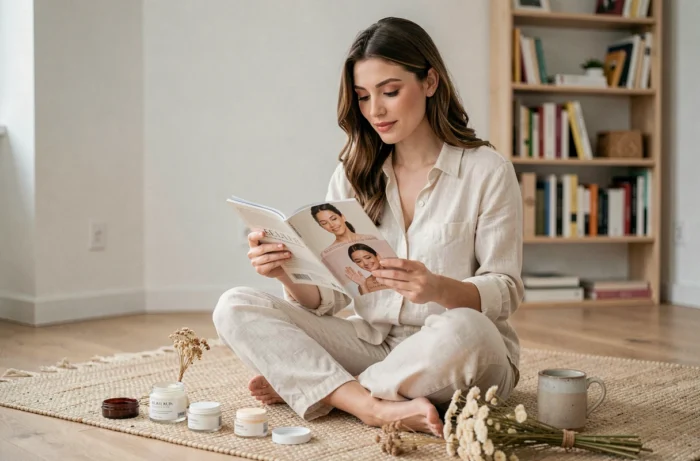
Filtering through the wealth of available beauty and wellness advice is less about how much information you consume than how you sort it. Your skin type, sensitivities to ingredients, and personal goals are the three filters to apply before searching for a routine or product.
Cosmetic allergens and labeling: the regulatory filter beauty guides overlook
Choosing a skincare product that suits your preferences is about more than texture or fragrance. European Regulation 2023/1545 expanded the list of fragrance allergens that must appear on cosmetic product labels. The transition period allows products placed on the market before July 31, 2026, to be sold until July 31, 2028, under the previous labeling rules.
In practice, beauty advice that recommends a cream or oil without mentioning the need to check the INCI list misses the point. Naturally derived ingredients (essential oils, plant extracts) also contain regulated allergens. Sensitive skin will react to an allergen in the same way, whether it comes from a laboratory or a plant.
Before following product advice you find online, always check the ingredient list on the packaging. If you know you are sensitive to a specific ingredient, the words “natural” or “organic” offer no guarantee that your skin will tolerate it.
We recommend cross-checking skincare advice against the actual ingredients in the suggested products. For example, browse the Espace Beauté sitemap to quickly find skincare categories organized by need.

Sponsored beauty advice: telling independent recommendations from paid content
France’s June 9, 2023 law regulating commercial influence requires content creators to clearly disclose when a recommendation is advertising, if it is made in exchange for payment or a benefit in kind. This legal framework changes how beauty and wellness advice online should be read.
Sponsored advice is not necessarily bad, but it is based on a marketing brief. The brand chooses the featured product, rather than the creator selecting it for your skin type. That distinction matters when you are looking for facial skincare to address a specific concern (dehydration, blemishes, sensitivity).
To assess whether advice is reliable, consistently apply these three criteria:
- Does the content include a disclosure such as “partnership,” “collaboration,” or “sponsored”? If a post praising a specific product has no disclosure, that has been a red flag since the law came into force.
- Does the creator describe the product’s active ingredients, or simply share a subjective impression (“my skin has been transformed”)? Useful advice names the ingredients and specifies which skin types they suit.
- Do recommendations vary from one post to the next, or do they keep revolving around the same partner brands? A diverse range of products is a good indicator of editorial independence.
Personalized beauty routine: filter by skin type and goal
Online beauty quizzes offered by some brands and platforms can help you make an initial selection. They are no substitute for a dermatological diagnosis, but they ask the right questions: skin type, sensitivity level, and primary goal (radiance, hydration, anti-aging, soothing).
A common pitfall is piling on steps and products without prioritizing them. An effective routine follows a specific order: from the lightest to the richest product, morning and evening. In the morning, it protects against external aggressors; in the evening, it supports skin repair. Three consistent steps deliver better results than a complex routine abandoned after two weeks.
Adjust your search for advice to the season
Skin needs change with the weather. Adjusting your routine two to three times a year helps account for changes in hydration, sebum production, and sun exposure. Advice that works in January (a rich cream, nourishing oil) can be counterproductive in July for combination skin.
Instead of searching for “best face cream” in general, narrow your search to your specific circumstances: “summer moisturizer for combination skin” or “winter face oil for dry skin.” You’ll get more targeted results and more relevant advice.
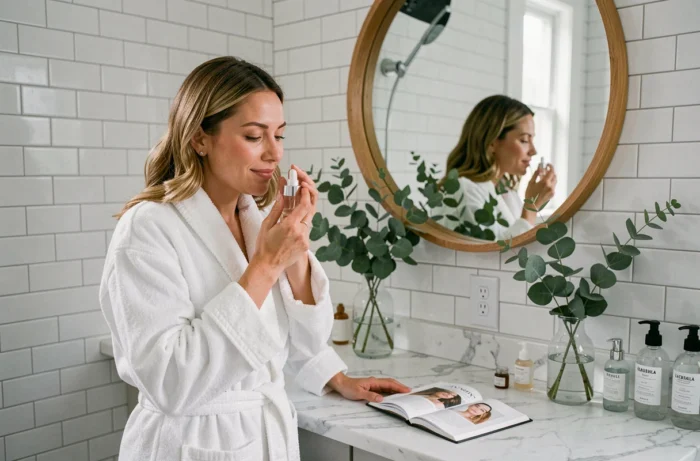
Makeup and body care: sort advice by level of evidence
In makeup and body care alike, the line between an effective tip and an unfounded claim is thin. Advice recommending a weekly body scrub is based on a known physiological mechanism (removing dead skin cells and improving microcirculation). Advice promising to “transform your skin in three days” with a single product is marketing.
The strength of the evidence behind a recommendation is reflected in how specific it is. Good advice names the active ingredient, specifies how often to use it, and mentions any potential contraindications. Empty advice is vague about ingredients and relies on before-and-after images that are difficult to verify.
The same principle applies to hair. A hair mask made with plant oil suits dry, thick hair but will weigh down fine hair. Relevant advice takes different needs into account; generic advice treats everyone the same.
Homemade cosmetics: a special case
Homemade cosmetic recipes are widely shared. Their appeal lies in being able to control the ingredients, but they lack preservatives and depend on hygienic preparation. Homemade skincare products rarely keep for more than a few days in the refrigerator without the risk of bacterial contamination.
The best approach is to reserve homemade preparations for products used immediately (face masks, body scrubs) and rely on professionally formulated products for everyday use, when product stability matters (moisturizer, serum, sunscreen).
Finding beauty and wellness advice that suits your needs means applying three filters before following a recommendation: the product’s actual ingredients, how independent the source is, and whether it suits your skin type. Everything else is noise.