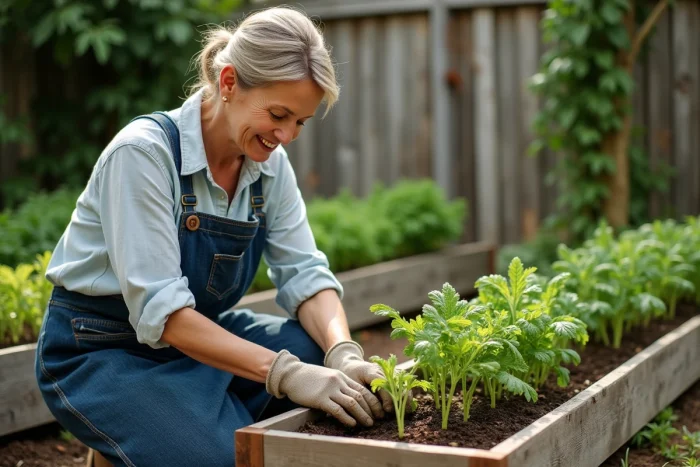
A natural vegetable garden is based on a simple principle: growing vegetables without synthetic products, relying on the biological mechanisms of the soil and the interactions between plants. This approach differs from conventional gardening by rejecting chemical fertilizers, pesticides, and synthetic herbicides, which are replaced by techniques such as composting, mulching, and plant associations.
Soil fertility in a natural vegetable garden: understanding before planting
The quality of a natural vegetable garden is determined below the surface. A living soil contains bacteria, mycorrhizal fungi, and a decomposer fauna (earthworms, springtails) that transform organic matter into nutrients that can be absorbed by the roots.
Before sowing anything, observing the soil provides more information than a planting plan. Clay soil retains water but compacts easily. Sandy soil drains quickly and requires frequent organic matter additions. Homemade compost corrects both extremes by improving both structure and water retention.
To produce effective compost on a budget, kitchen waste (peelings, coffee grounds, crushed eggshells) mixed with carbon-rich materials (dead leaves, unprinted cardboard) is sufficient. The goal is to obtain a dark, crumbly amendment with a forest floor smell, indicating that decomposition is complete. This compost is incorporated on the surface, without deep turning of the soil, to preserve the organisms living there.
Various resources allow for a deeper understanding of these ecological gardening principles, and accessing the Jardiner Naturellement site offers a good starting point for structuring one’s approach.
Mulching and soil coverage: the technique that changes everything in the vegetable garden
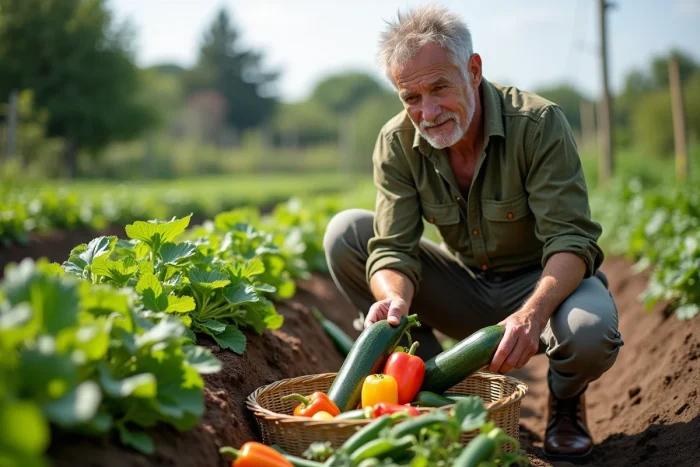
Mulching is probably the most cost-effective practice in a natural vegetable garden. A bare soil is a degrading soil: exposed to the sun, it loses moisture and its microfauna. Exposed to rain, it compacts and forms an impermeable crust.
Covering the soil between plants with straw, dried grass clippings, branch chippings, or dead leaves serves several functions simultaneously:
- Reduction of evaporation, significantly spacing out watering, especially in summer
- Limitation of weed growth, which no longer receives enough light to germinate
- Gradual addition of organic matter to the soil through the slow decomposition of the plant layer
- Thermal protection of the roots against temperature fluctuations between day and night
The thickness of the mulch depends on the season. In spring, a moderate layer allows the soil to warm up. In midsummer, a thicker layer maintains freshness. Mulching early avoids the chore of weeding all season.
Nutrient-dense vegetables: choosing quality over quantity
A common reflex among beginners is to multiply species. In a small area, this strategy disperses energy and complicates management. Recent publications, particularly on GardenShaman.eu, highlight the interest in selecting a few particularly nutrient-dense vegetables rather than a wide range of species.
Among the crops that maximize nutritional input in a small space, kale stands out for its richness in vitamins and hardiness. Bell peppers, leeks, and certain varieties of dark-leaved salads complement a vegetable garden focused on food quality.
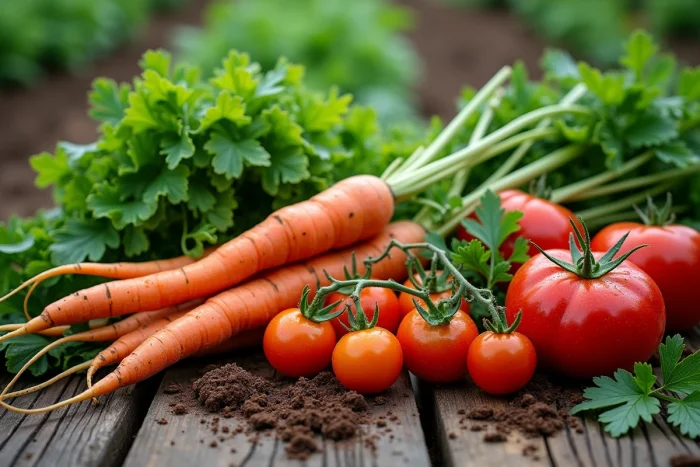
Crop associations also come into play. Planting legumes (beans, peas) near leafy vegetables benefits the latter: legumes fix atmospheric nitrogen in the soil, reducing the need for amendments. A well-planned vegetable garden of a few square meters nourishes better than a large, poorly organized garden.
Water management and sowing throughout the seasons
Water often represents the most constraining aspect of a natural vegetable garden. Collecting rainwater, via a simple collector connected to a gutter, reduces dependence on the mains and provides chlorine-free water, which is better tolerated by plants.
Watering at the base, early in the morning or at the end of the day, limits evaporation and fungal diseases related to stagnant moisture on the foliage. Deep and spaced watering encourages roots to go down, making plants more drought-resistant.
For sowing, the calendar depends on the local climate. Some vegetables (radishes, lettuce, spinach) can be sown as early as the end of winter under cover or directly in the ground in spring. Others (tomatoes, zucchinis, peppers) require starting indoors before transplanting once the frosts have passed. Staggering sowing every two to three weeks extends the harvest period and avoids ending up with a concentrated surplus over a few days.
Very economical solutions exist for sowing materials: yogurt pots with holes, collecting seeds from last season’s fruits, making plant infusions (nettle, comfrey) as free liquid fertilizers.
Natural vegetable garden and well-being: beyond the plate
Several health popularization articles, including one from Pharmacie Septème, now describe the vegetable garden as a lever for reconnecting with nature. The gentle physical activity it provides (bending, carrying, digging) is accompanied by a documented effect on stress reduction and improved sleep.
This benefit is not a gimmick. Regular contact with the soil, the patience required by the plant cycle, and the attention paid to the seasons create a concrete break from digital rhythms. The vegetable garden impacts overall health, not just the contents of the plate.
A well-managed natural vegetable garden requires neither large space nor a big budget. A soil nourished with compost, appropriate mulching, a few varieties chosen for their nutritional density, and a rational water management form a sufficient technical foundation to harvest healthy vegetables over several seasons. The rest is learned with each cycle, plant by plant.