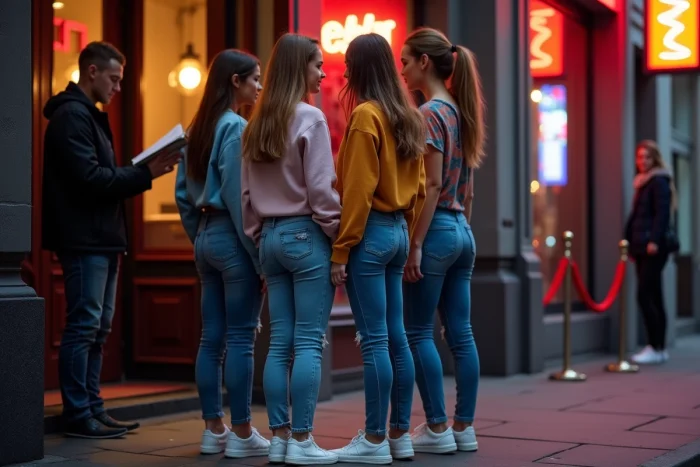
On a a Saturday night, your 16-year-old asks to go out to a nightclub with friends. Immediate reflex: check what the law actually allows. In France, there is no law that formally prohibits entry to a nightclub for a minor aged 16, but the reality on the ground is much more nuanced than this absence of prohibition suggests.
Sale of alcohol to minors and access to nightclubs: the distinction that no one makes
People often confuse two things: the right to enter a nightlife venue and the right to consume alcohol there. These are two separate legal frameworks.
The Public Health Code prohibits the sale or free offering of alcohol to any minor. This rule applies everywhere, including nightclubs. An establishment that serves a cocktail to a 16-year-old risks sanctions, and it is this risk that drives the vast majority of managers to refuse entry to minors.
Access to the venue itself falls under a different mechanism. The manager freely decides to set a minimum entry age, often 18 years, sometimes 21 years for certain events. It is not the law that imposes these thresholds; it is a commercial policy combined with a legal precaution. If a problem arises (alcohol poisoning, fight, parental complaint), the operator bears direct responsibility.
To better understand the minimum age for nightclubs according to Mister Papa, we can also look at how establishments concretely apply these rules on a daily basis.
ID checks at the entrance: what really happens at the door
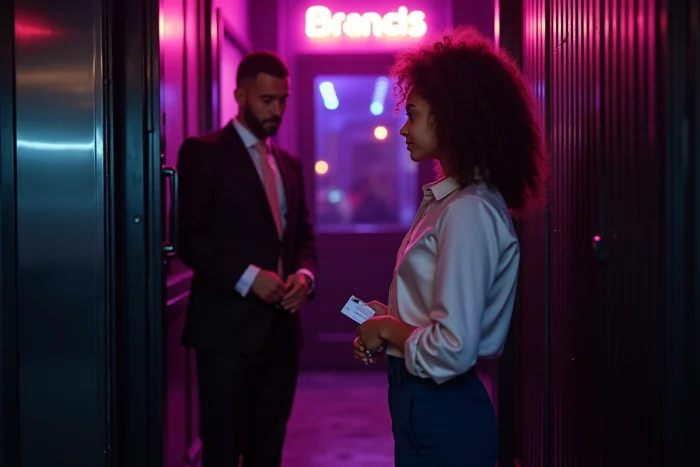
The bouncer asking for an ID is not acting on a whim. Checks have significantly strengthened in recent years, largely to cover the establishment’s liability.
In practice, you will be asked for an ID card, passport, or driver’s license. A student ID or a photo on a phone is never sufficient. If you have no official document with a photo and date of birth, refusal is almost systematic, regardless of your actual age.
The check does not only focus on age. Dress code, group size, attitude upon arrival, and time of night come into play. A group of six teenagers showing up at midnight has much less chance of getting in than a duo accompanied by adults earlier in the evening. Feedback on this point varies by city and type of establishment, but the general trend is towards more selection.
Events accessible to 16-year-olds: the formats that actually exist
Not all nightlife outings go through the classic nightclub. Several formats legally welcome minors aged 16, and knowing them avoids being stuck in front of a door.
- “Teen” or “under 18” parties organized by some clubs during the day or early evening, without alcohol sales at the bar, closing before midnight. The setting is designed for minors, sometimes requiring parental permission at the entrance.
- Private events (birthdays, community parties) in rented venues, where the organizer sets their own rules and where the issue of a beverage license does not arise in the same way.
- Music bars or concert halls that schedule events open to all ages, with control over alcohol consumption at the bar rather than at the entrance.
These alternatives often represent a better compromise for a 16-year-old than trying their luck in a classic nightclub on a Saturday at 1 AM.
Parental responsibility and permission to go out: what the law expects from parents
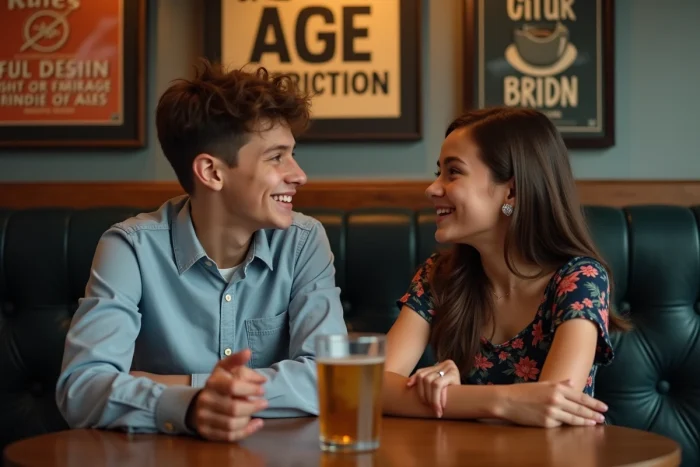
When a minor goes out at night, the civil liability of the parents remains engaged. Even if your teen enters a club without your knowledge, an incident (injury, alcohol consumption, public disturbance) can come back to you.
Some establishments that accept 16-17 year-olds require a written parental authorization with a copy of the parent’s ID. This document does not have a standardized legal form, but it protects both the manager and the family. Without this paper, refusal of entry is the norm.
Practically, it is recommended to check a few points before giving your consent:
- Does the establishment specifically organize parties open to minors, or is your teen trying to enter a standard party?
- Is the return planned (transport, time, accompaniment)? A minor alone on the street after 1 AM may be checked by the police and taken to the station.
- Does the group include an identified adult chaperone, or is it exclusively composed of minors?
These precautions are not paranoia. They correspond to what nightclub managers themselves expect when they open their doors to a young audience.
Going out at 16 legally: the reflexes to adopt
The question is not just “can you enter a nightclub at 16,” but rather “under what conditions does this happen correctly.” Having a valid ID, aiming for events suitable for minors, and preparing a parental authorization form the basic triptych.
An establishment that refuses a minor is not acting out of bad faith. It applies a policy that protects it against the law on alcohol sales and against its liability in case of an accident. Rather than forcing entry into a club that does not want a minor audience, it is better to steer the evening towards a format designed for this age group, where the atmosphere exists without the legal risk.