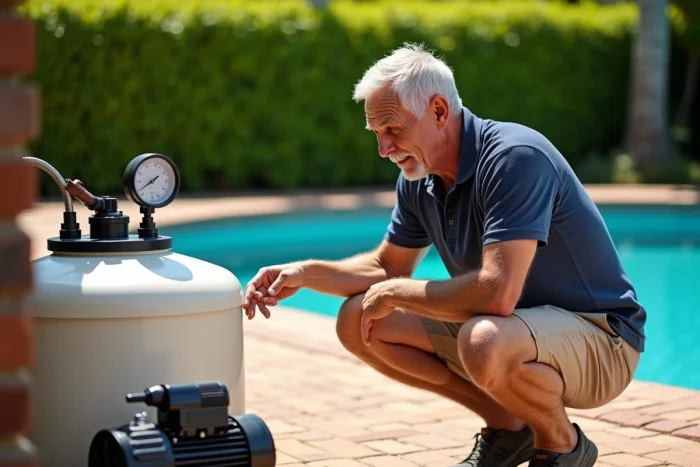
The sand filter manometer displays a value, but it is impossible to know whether it indicates a problem or normal operation. The difficulty lies in the fact that there is no universal number applicable to all installations. The pressure depends on the diameter of the filter, the power of the pump, the length of the pipes, and the condition of the sand. Reasoning in absolute terms often leads to erroneous diagnoses.
Reference pressure after backwashing: the only reliable benchmark
Recent manufacturers emphasize a point that most online guides overlook: the reference pressure is measured just after a complete backwash, with a clean filter and good quality sand. This value, specific to each installation, constitutes the true zero point.
To measure it correctly, one must start filtration in normal mode after a backwash, wait for the flow to stabilize (a few minutes is sufficient), and then note the value displayed on the manometer. This data should be recorded, for example, with a marker in the technical room or in a logbook.
The difference between this reference pressure and the pressure during the season triggers an action. A difference of +0.3 to +0.5 bar indicates that a backwash is necessary. Beyond that, the filter operates under stress, and the filtration quality deteriorates. Understanding the pressure of the pool sand filter starts with this individual calibration, not a theoretical standard.
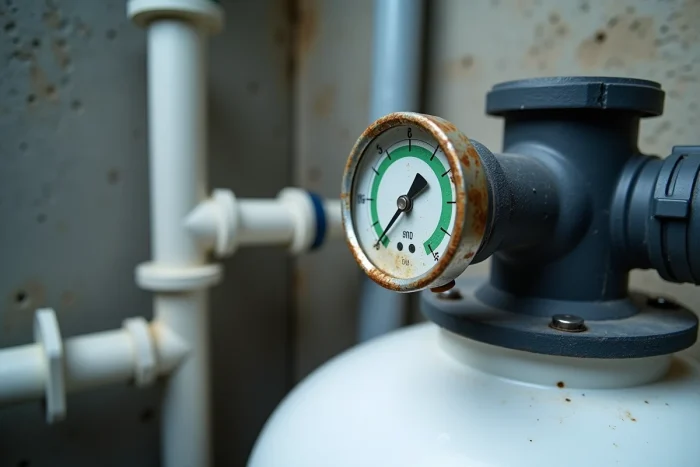
Sand filter or cartridge filter: the normal pressure is not the same
A sand filter structurally operates at higher pressures than a cartridge filter. Cartridge filters generally work within a low range, often between 0.5 and 1.5 bar according to feedback from manufacturers like MyPiscine. Sand filters, designed to withstand more pressure, display higher values during normal operation.
This distinction has a direct consequence: an owner comparing the pressure of their sand filter with the values found on a forum dedicated to cartridges may mistakenly believe that their installation is under pressure when it is operating normally. The type of filter changes the very notion of normal pressure.
Worn sand and chronically high pressure: when the filter ages
When the pressure remains abnormally high even after a thorough backwash, the problem often lies with the filtering media itself. The sand gradually clogs, particularly due to dissolved limestone in the water. The grains clump together, porosity decreases, and the filter offers increasing resistance to the flow of water.
The lifespan of the sand varies depending on usage and water hardness. Specialists like PoolPlanet estimate the replacement frequency between three to seven years. Beyond this threshold, fouled sand permanently alters the working pressure and renders the reference pressure obsolete. Therefore, after each sand replacement, it is essential to recalibrate this reference.
Concrete signs of sand nearing the end of its life
- The pressure rises very quickly after a backwash, sometimes within just a few hours, even though the pool is not particularly dirty.
- The pool water remains slightly cloudy despite proper chemical treatment and sufficient filtration time.
- Sand residues appear in the pool through the return jets, indicating that the filter’s strainers are damaged or that the sand has fragmented.
- The backwash produces water that remains colored longer than usual, indicating deep clogging.
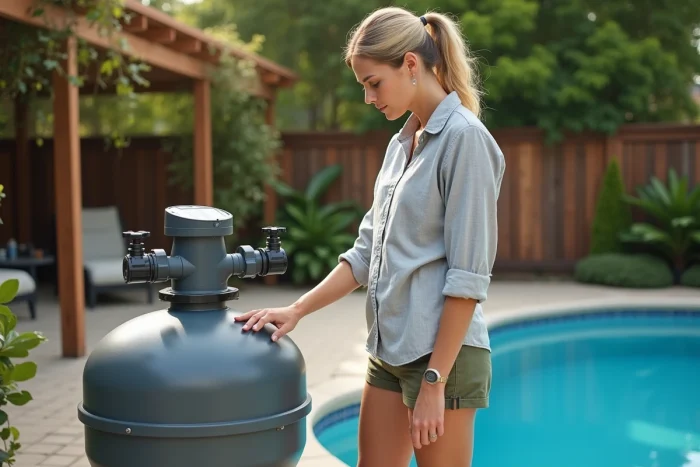
Pool filter manometer: a fragile sensor often neglected
Before looking for the cause of abnormal pressure in the piping or the sand, it is important to check the manometer itself. This component, exposed to the vibrations of the pump and temperature variations, loses reliability over time.
A manometer that does not read zero when the pump is off is a faulty manometer. The reading then becomes useless. Replacement is inexpensive and can be done in a few minutes, yet many pool owners ponder over a distorted value for weeks without questioning the instrument.
Quick diagnosis of a pressure problem
- Pressure too low: check the pump pre-filter basket, the water level in the pool (at least three-quarters full in the skimmers), and the absence of air intake on the suction side.
- Pressure too high at startup: suspect a mispositioned multiport valve, a partially closed return, or agglomerated sand.
- Pressure drops suddenly after a few minutes: look for a leak in the suction circuit or intermittent clogging at the skimmer.
Field reports vary on this point, but a drop in pressure accompanied by air bubbles in the pre-filter almost always points to an air intake on the suction side, whether it’s a pump lid seal, a cracked glued fitting, or a worn valve seal.
A reliable manometer and a reference pressure recorded after each backwash form the basis for effective monitoring. Without these two elements, any diagnosis of the sand filter pressure remains approximate, regardless of the quality of the rest of the installation.