
A check engine light coming on the highway, a suspicious noise when braking after prolonged parking, an electric charging bill three times higher than expected at a public station: the automobile in 2025-2026 confronts drivers with situations that neither the vehicle manual nor the dealer always clearly explains. Deciphering industry news, understanding regulatory changes, and choosing the right vehicle today requires cross-referencing various types of information, from technical data to field feedback.
Manufacturer recalls on thermal and hybrid engines: a persistent blind spot
Early issues with electric cars grab attention, but recall campaigns also affect thermal and hybrid engines. Toyota and Lexus, for example, have been facing recurring problems with their V6 twin-turbo since May 2024: machining debris that can lead to crankshaft bearing failure.
Over 100,000 vehicles were involved in an initial recall, including about 10,000 in Canada, followed by a second recall in November 2025.
This type of situation reminds us that reliability remains a cross-cutting issue, regardless of the engine type. Before purchasing a recent model, it’s wise to check the manufacturer’s recall history on public databases (NHTSA, RAPEX in Europe). A thermal or hybrid model is not automatically more reliable than an electric one, and vice versa.
To keep up with this type of news and compare user experiences between engine types, the site soustouslesangles.fr aggregates analyses that cover both new releases and concrete problems faced by owners.
Plug-in hybrids versus all-electric: deciding based on actual usage
The debate between plug-in hybrids and all-electric often boils down to a question of advertised range. In practice, the choice depends on much more concrete parameters.

A driver who primarily makes daily commutes of less than 50 km, with a home charging point, benefits significantly from an all-electric vehicle. The cost of use drops, maintenance simplifies (no oil changes, no clutch). However, for mixed usage that includes regular highway trips of several hundred kilometers, the plug-in hybrid retains a clear operational advantage.
The International Energy Agency emphasizes in its Global EV Outlook 2025 that hybrids, whether plug-in or conventional, continue to play a more sustainable transitional role than what content focused on all-electric suggests. Feedback on this point varies by country and available charging infrastructure.
Here are the concrete criteria to consider before choosing:
- The average daily distance: below 60 km with a charging point, the electric option becomes profitable quickly. Beyond that, the plug-in hybrid alleviates range anxiety.
- Access to a home or workplace charging station: without a regular charging solution at home, the cost of charging at public stations can significantly reduce the economic advantage of the electric vehicle. The association Que Choisir has also denounced a “pricing jungle” on charging stations in France.
- The total budget over five years: include the purchase price, depreciation, insurance (often higher on a new electric vehicle), energy, and maintenance. In this overall calculation, the gap between the two solutions narrows depending on the models.
- The anticipated resale value: popular electric SUVs (Tesla Model Y, Renault Megane E-Tech) currently retain a decent value, but the used electric market remains young and unpredictable.
Charging station pricing in France: what complicates the calculation
Charging an electric car away from home remains a bewildering experience. Price discrepancies between operators, between subscriptions and pay-as-you-go rates, and between slow and fast charging make any prior estimation risky.
There is still no standardized pricing on the French network of public charging stations. Some operators charge per kWh, others per minute, while some combine both with a connection fee. A single trip can cost anywhere from one to three times more depending on the network used.
For a driver considering switching to electric, the first thing to check is not the theoretical range of the vehicle, but the coverage and pricing of charging stations along their usual routes. Route planning apps (ChargeMap, ABRP) allow users to simulate a complete trip with charging stops and associated costs.
Digital driver’s license and new European rules: what changes concretely
The European Union confirmed in 2025 the modernization of driver’s license rules, with two changes that will directly impact motorists in the coming years.
The first concerns the generalization of a digital driver’s license across Europe. The goal is to allow each driver to present their license from their smartphone during a check, in any member state. The European Parliament has initiated legislative work on this digitalization in 2025.
The second affects the conditions for accompanied driving and the harmonization of license categories between countries. For French drivers, this does not change anything immediately, but future license candidates could benefit from a more uniform framework in case of moving to another EU country.
SUVs, sedans, and city cars: segments that are changing in Europe
The compact electric SUV segment is attracting the attention of European manufacturers. Stellantis has unveiled a new strategic plan for Europe, promising popular electric vehicles in this niche. Renault continues to roll out its E-Tech range. Peugeot is positioning its electric models at more accessible prices than the previous generation.
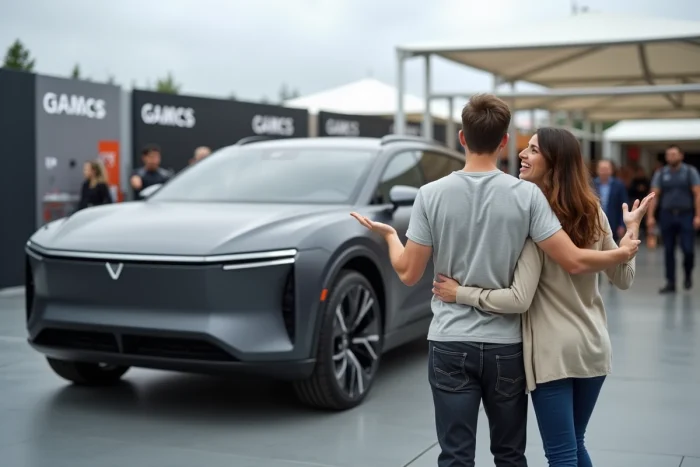
Meanwhile, the arrival of Chinese manufacturers like GAC AION or Xiaomi is shaking up pricing structures. The Xiaomi YU7 GT, announced with high performance at a significantly lower price than European equivalents, illustrates the competitive pressure now exerted on the continent’s historic brands.
For buyers, this competition has a direct positive effect: prices are dropping, standard equipment is improving, and delivery times are shortening on several models. Choosing a vehicle in 2026 will rely less on brand loyalty and more on a methodical comparison of real prices, measured range, and long-term usage costs.